Most people don’t realize there are 9 states with no income tax in 2026 – and living in one of them could be the single biggest financial move you ever make without changing your job, your salary, or how you spend your money.
Just imagine getting your paycheck on Friday and not watching a chunk of it disappear to the state. No line item, no percentage skimmed off the top – just your money, staying yours. For people living in these nine U.S. states, that’s not wishful thinking. That’s just Tuesday.
And it’s not only your paycheck. Retirement income too – pensions, 401(k) withdrawals, Social Security – all of it untouched by the state.
But here’s what most articles won’t tell you upfront: “no income tax” doesn’t mean “no taxes.” States still have roads to pave, schools to run, and emergencies to respond to. They just fund those things differently. Sometimes very differently. So before you start Googling moving trucks, let’s walk through what this actually looks like – state by state, trade-off by trade-off.
Which States Have No Income Tax in 2026?
Let’s get the quick answer out of the way first, because this is probably why you’re here.
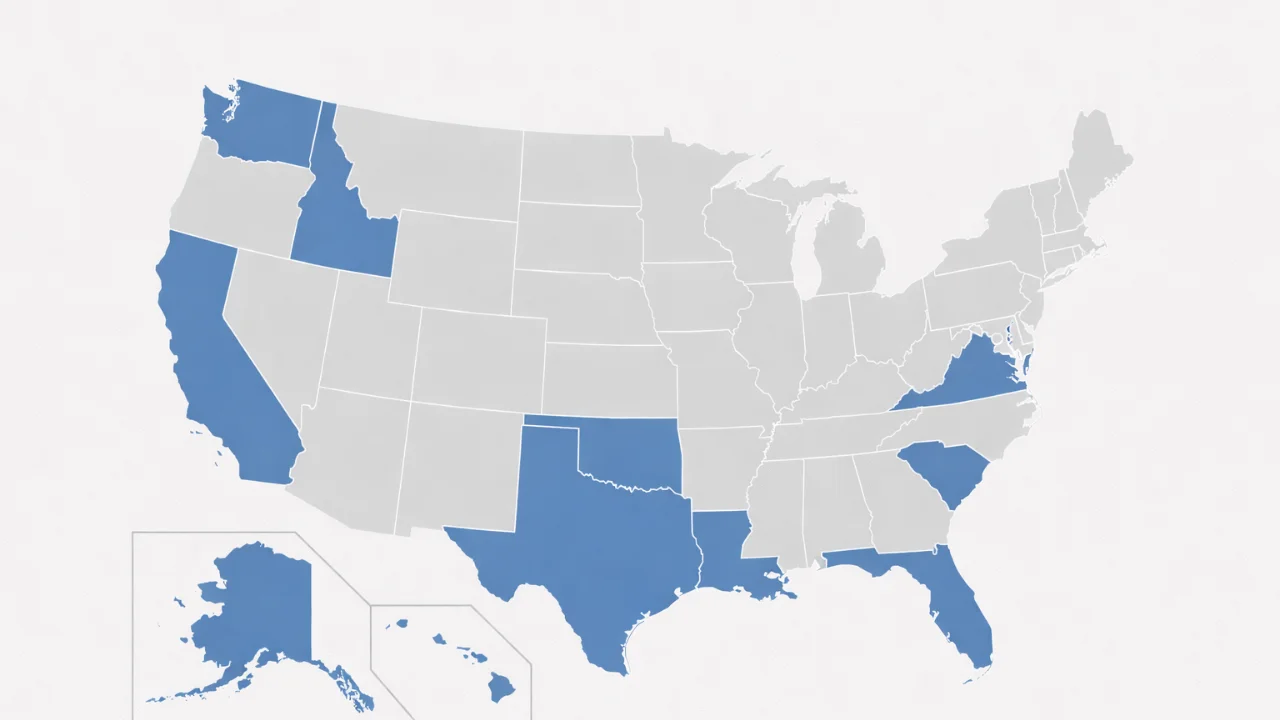
These are the 9 states with no state income tax in 2026:
- Alaska
- Florida
- Nevada
- New Hampshire
- South Dakota
- Tennessee
- Texas
- Washington
- Wyoming
Every other state takes a cut of what you earn. These nine don’t. The list is unchanged from 2025, though the broader tax landscape around the country is shifting fast – more on that at the end.
Key Points to Know About States With No Income Tax
If you’re skimming, here’s the honest summary:
- Nine states have zero individual state income tax in 2026, and that list holds steady from last year.
- Retirees often benefit the most, since pension income, retirement account withdrawals, and Social Security all escape state taxation in these states.
- No income tax does not mean no taxes – these states often rely on higher sales taxes, property taxes, or industry-specific revenues.
- Moving to a no-income-tax state requires establishing legal residency – typically spending at least 183 days per year in that state.
- The overall tax burden varies widely. Some of these states are genuinely low-tax; others offset income tax savings with higher costs elsewhere
Now let’s get into the details.
Why Do Some States Have No Income Tax?
It’s a fair question. Governments need funding. So why would a state just not collect income taxes?
The honest answer is that it’s a political and economic choice, not a magic trick. These states have found other ways to generate revenue, and some of them are pretty clever about it.
Nevada leans on its casinos and tourist dollars. Alaska taps oil revenues so effectively that it actually pays residents an annual dividend just for living there. Wyoming taxes the extraction of coal, gas, and minerals. The money still flows in – just from different sources than your W-2.
For states that don’t have a natural resource windfall or a massive tourism industry, the trade-off usually shows up in higher sales taxes or steeper property taxes. So the burden shifts – sometimes onto homeowners, sometimes onto everyday shoppers, sometimes both.
The 9 States With No Income Tax – Explained
1. Alaska
Alaska is genuinely remarkable from a tax perspective. It’s one of the only states in the country with no income tax and no statewide sales tax. Some local municipalities do charge a small sales tax, usually somewhere between 2% and 5%, but there’s nothing levied at the state level.
Even more unusually, Alaska actually pays you. The Alaska Permanent Fund, built on oil and mineral revenues since 1976, distributes an annual dividend to residents every year. The amount fluctuates based on oil revenues – residents have received anywhere from $1,000 to over $3,200 in recent years depending on the fund’s performance.
Property taxes sit at a reasonable effective rate of about 1.07%. Residents 65 and older get an exemption on the first $150,000 of assessed home value, which is a meaningful perk for retirees.
The trade-off: Alaska is expensive to live in. Groceries, healthcare, and basic goods all cost more because getting them there costs more. The tax savings are real, but so is the cost of remote living.
2. Florida
Florida has been one of the most popular retirement destinations for decades, and tax policy is a big reason why. The Sunshine State charges no individual income tax, no estate tax, no inheritance tax, and no long-term capital gains tax.
How does Florida pay for things? Primarily through a 6% statewide sales tax, which rises to an average of about 7% when local taxes are added. Tourism also pumps enormous revenue into the state, helping fund services without hitting residents’ paychecks.
Property taxes carry an effective rate of about 0.74% on owner-occupied homes – on the lower end nationally. Homeowners can apply for Florida’s homestead exemption, which can reduce a property’s taxable value by up to $50,000.
The trade-off: Coastal cities like Miami and Fort Lauderdale have seen housing costs surge. Florida’s quality of public education and healthcare can also vary significantly depending on the county.
3. Nevada
Nevada skips income taxes and goes further – no capital gains tax, no estate tax, no inheritance tax either. It’s a pretty clean tax profile.
How does Nevada pay for things? Gaming and tourism are major engines. The Las Vegas economy alone generates enormous tax revenue. The combined state and local sales tax rate averages around 8.24%, one of the higher rates among no-income-tax states.
Property taxes are actually quite low at an effective rate of just 0.49%. Veterans, disabled veterans, and surviving spouses can qualify for additional exemptions.
The trade-off: Living costs vary widely depending on where in Nevada you land. Las Vegas and Reno have both gotten more expensive in recent years. Rural Nevada is still quite affordable.
4. New Hampshire
New Hampshire is a bit of an outlier on this list, and in the best possible way. It has no income tax and no statewide sales tax – one of only five states that can say that. As of January 1, 2025, it finished phasing out its old tax on interest and dividend income, making it fully income-tax free across the board going into 2026.
How does New Hampshire pay for things? Almost entirely through property taxes. The state’s effective property tax rate is about 1.41% – the highest of any state on this list. That’s how it funds everything, and it’s something you’ll want to factor in carefully if you’re thinking about buying a home there.
Property taxes are the one real sticker here. Low-income homeowners may qualify for property tax relief programs, which softens the blow somewhat.
The trade-off: The cost of living tends to be above the national average, especially in the towns closest to Boston. But for many people – particularly remote workers and retirees – the no-income, no-sales-tax combination is genuinely hard to argue with. New Hampshire consistently ranks near the top of quality-of-life measures, with strong public schools and low unemployment.
5. South Dakota
South Dakota earns the No. 2 spot in the Tax Foundation’s State Tax Competitiveness Index, and it’s easy to see why. No individual income tax, no corporate income tax, no estate tax, no inheritance tax. It’s a clean, simple tax environment.
How does South Dakota pay for things? Through a combined state and local sales tax rate averaging around 6.11%, plus locally assessed property taxes with an effective rate of about 0.99%.
Property taxes stay relatively reasonable, and low-income adults 65 and older may qualify for an annual refund of state and property taxes. Several additional relief programs exist specifically for older homeowners.
The trade-off: South Dakota is largely rural. If you’re used to big-city amenities like specialized healthcare, entertainment, and a wide range of services, the adjustment can be significant. On the upside, the cost of living is comfortably below the national average.
6. Tennessee
Tennessee made it official: no more state income tax. After phasing out its old tax on investment income, everything – wages, salary, retirement distributions, dividends – is now free from state income taxation.
How does Tennessee pay for things? Largely through sales taxes. Tennessee has one of the highest combined state and local sales tax rates in the country, averaging about 9.55% in 2026. That’s real money if you’re a regular shopper – every trip to the grocery store, every restaurant meal, every purchase adds up in a tangible way.
Property taxes are much lighter at an effective rate of around 0.49%, with relief programs available for seniors, disabled residents, and veterans.
The trade-off: That high sales tax is something you’ll feel daily. Nashville’s economy is booming and the cost of living is still below the national average in most of the state, but do the math on your shopping habits before assuming you’ll come out way ahead.
7. Texas
Texas makes a lot of noise about being a low-tax state, and it has a point – to a degree. No income tax, no corporate income tax, no estate tax, no inheritance tax. If you’re a high earner, Texas can represent a significant raise.
How does Texas pay for things? A combined sales tax rate averaging around 8.2%, and property taxes that are among the highest in the nation. If you own an expensive home in Austin or Dallas, that property tax bill can be eye-opening.
Property taxes are the main trade-off here. That said, as of January 1, 2026, the state further reduced the maximum compressed tax rate for school districts, shifting more of the school funding burden from local homeowners to the state – a meaningful update that will lower property tax bills for many Texans this year. There’s also a homestead exemption excluding the first $140,000 of appraised value, with an additional $60,000 exemption for homeowners who are 65 or older or disabled.
The trade-off: Property tax costs in major cities can be substantial. Go in knowing that the income tax savings might be partially offset by what you pay to own a home, especially in fast-growing metros.
8. Washington
Washington is the most complicated entry on this list, and worth looking at carefully.
Yes, there’s no personal income tax. But Washington is not a low-tax state by most measures. It has the highest estate tax rate in the nation at up to 35%, and it taxes capital gains for high earners – 7% up to $1 million, rising to 9.9% beyond that threshold.
How does Washington pay for things? Primarily through a combined sales tax rate averaging around 9.47%, one of the highest in the country. Every purchase contributes meaningfully to the state’s revenue.
Property taxes are relatively moderate at about 0.75% effective rate, and homeowners 61 and older may qualify for reductions based on income.
The trade-off: For someone who earns a solid salary, doesn’t have a large estate, and isn’t selling major investments, the no-income-tax status is still valuable. But Washington is home to Amazon and Microsoft for a reason – the economy is extraordinary. Just go in with your eyes open about the other taxes.
9. Wyoming
Wyoming sits at the top of the Tax Foundation’s State Tax Competitiveness Index, and it earns that position. No income tax, no corporate income tax, no estate tax, no inheritance tax. A sales tax that averages around 5.56% combined – notably lower than most states on this list. And a property tax rate of just 0.55%, with a 25% exemption on the first $1 million of value for single-family homes enacted in 2025 and carrying through into 2026.
How does Wyoming pay for things? Substantially through mineral extraction taxes on coal, oil, gas, and other natural resources. It’s a model that works well for Wyoming, even if it means state finances can shift with commodity prices.
Property taxes stay very low, and the state has a property tax relief program for low-income homeowners 62 and older, veterans, and surviving spouses.
The trade-off: Wyoming is beautiful but remote. The quality of life is genuinely high if you love the outdoors and wide-open spaces, and the cost of living is below the national average. But access to specialized healthcare, major cultural institutions, and certain services requires real planning.
How Do States Without Income Tax Make Up the Revenue?
This is the key question most people forget to ask. Here’s a breakdown of the main strategies:
Sales Taxes are the most common replacement tool. Tennessee, Washington, and Texas all rely heavily on sales taxes – and their rates are among the highest in the nation. Every time you buy groceries, clothing, electronics, or dine out, you’re contributing to state revenues.
Property Taxes are another major source. New Hampshire relies on property taxes almost exclusively. Texas also leans on them heavily. If you own a home, high property taxes can quickly add up to more than you’d have paid in income taxes.
Industry Revenues play a major role for resource-rich states. Alaska’s oil fund, Wyoming’s mineral extraction taxes, and Nevada’s gaming taxes all fund essential services without tapping residents’ paychecks.
Excise Taxes on items like gasoline, alcohol, and tobacco also generate revenue in many of these states.
Federal Aid supplements all state budgets, helping fund education, infrastructure, and healthcare regardless of a state’s tax structure.
Benefits of Moving to a State With No Income Tax
Living in a state with no income tax comes with some real, tangible advantages.
More take-home pay. The most obvious benefit. A resident earning $80,000 per year in a state with a 5% income tax is paying $4,000 annually to the state. Eliminating that is a meaningful raise – without asking for a promotion, switching careers, or working a single extra hour.
Better retirement income. Retirees get perhaps the biggest benefit. Pension payments, IRA and 401(k) withdrawals, and Social Security benefits are all free from state income tax. For someone drawing $60,000 per year in retirement income, this can represent thousands of dollars in annual savings – money that stays in your pocket, not the state’s.
Simpler tax filing. When there’s no state income tax, there’s no state income tax return to file. That’s one less form, one less deadline, and potentially lower tax preparation costs every spring.
Business-friendly environment. States without income tax tend to attract entrepreneurs, remote workers, and businesses looking to reduce overhead. That often leads to stronger local economies and more job opportunities for everyone.
The Downsides: What to Watch Out For
Moving for tax reasons can be smart, but it requires a clear-eyed view of the full picture.
Higher taxes elsewhere. Sales taxes, property taxes, and excise taxes can offset your savings significantly. If you’re a big spender or a homeowner, run the numbers before assuming you’ll come out ahead
Cost of living variation. Washington State’s Seattle metro and Florida’s Miami are expensive places to live. The absence of income tax doesn’t automatically translate into a lower overall cost of living.
Public services vary. Without income tax revenue, some of these states fund schools, public health, and infrastructure at lower levels. The quality of public education in particular can be inconsistent.
Establishing legal residency. Simply visiting a state isn’t enough. To benefit from no income tax, you need to establish legal domicile – typically by spending more than 183 days per year there, updating your driver’s license and voter registration, and using local bank accounts and utility bills to document your residency.
Be especially careful if you maintain a home in a high-tax state. Some states (like New York and California) aggressively audit former residents who try to claim they’ve moved away. You may need to sever financial and personal ties carefully.
States With No Income Tax: At a Glance
| State | Avg. Sales Tax | Effective Property Tax | Other Notable Taxes |
|---|---|---|---|
| Alaska | 2-5% (local only) | 1.07% | None statewide |
| Florida | ~7% | 0.74% | None |
| Nevada | ~8.24% | 0.49% | None |
| New Hampshire | None | 1.41% | None |
| South Dakota | ~6.11% | 0.99% | None |
| Tennessee | ~9.55% | 0.49% | High sales tax – plan accordingly |
| Texas | ~8.2% | 1.36% | None |
| Washington | ~9.47% | 0.75% | Estate tax (up to 35%), capital gains tax |
| Wyoming | ~5.56% | 0.55% | None |
Who Benefits Most From Living in a State With No Income Tax?
Retirees – Especially those drawing significant income from pensions, retirement accounts, or Social Security. Eliminating state income tax on those sources can save thousands per year.
High earners – The higher your income, the more you save by avoiding a state income tax. Someone earning $200,000 in a state with a 6% tax rate saves $12,000 per year by moving to a no-income-tax state (assuming similar other costs).
Remote workers – If you can work from anywhere, a no-income-tax state can give you a permanent raise without changing jobs.
Business owners – States like Wyoming and South Dakota also eliminate corporate income taxes, making them attractive for LLCs, holding companies, and entrepreneurs.
Investors – Though Washington taxes capital gains for high earners, most other states on the list impose no capital gains tax, making them attractive for those with significant investment income.
Is Moving to a No-Income-Tax State Worth It?
The answer depends on your personal situation. If you earn a high income, own a modest home, and don’t mind a higher sales tax, the math can work strongly in your favor. A high-earning couple moving from California (which has a top income tax rate above 13%) to Wyoming could save tens of thousands of dollars per year.
On the other hand, if you’re a moderate earner who rents and spends heavily on taxable goods, you might find that Tennessee’s 9.61% sales tax or Texas’s property taxes eat into whatever you would have saved.
Before making a move, calculate your total tax burden – not just income taxes. Factor in property taxes, sales taxes, and the cost of living in specific cities within each state.
Frequently Asked Questions
Are Social Security benefits taxed in states with no income tax?
No. In all 9 states with no income tax, Social Security benefits are free from state income taxation.
Do I still pay federal income tax if I live in a no-income-tax state?
Yes. Federal income taxes are completely separate from state income taxes. Moving to a no-income-tax state has no effect on
your federal tax bill.
Which state has the lowest overall tax burden?
Wyoming consistently ranks as the most tax competitive state, with low sales taxes, low property taxes, and no income tax. Alaska is also extremely competitive, especially given its Permanent Fund dividend.
Can I be taxed by two states at once?
Yes, in some situations. If you maintain a home in a high tax state and spend significant time there, you could be considered a “statutory resident” subject to that state’s income tax even if you claim legal domicile elsewhere. Tax planning and documentation are essential.
Which states have no income tax and no sales tax?
Only New Hampshire has neither a state income tax nor a statewide sales tax, making it one of the lightest-taxed states for earned income and everyday purchases. Alaska also has no statewide sales tax, though local municipalities may charge one.
Which states moving toward no income tax?
Yes. Several states including Georgia, Indiana, North Carolina, and Nebraska are actively cutting rates in 2026. Mississippi has a formal plan to eliminate its income tax entirely by 2040. The trend is real and picking up speed.
The Bottom Line
Living in one of these 9 states with no income tax can absolutely put real, meaningful money back in your pocket – especially if you’re retired, self-employed, a high earner, or a remote worker with flexibility about where you plant your flag.
The smartest move is to do the full math: compare your current state’s income tax against the sales taxes, property taxes, and cost of living in your target state. For many people especially retirees and high earners the numbers work out very favorably. For others, the difference may be smaller than expected.
Whatever you decide, understanding how these states fund themselves gives you the knowledge to make a truly informed financial decision.